Methanol fuel-cell system
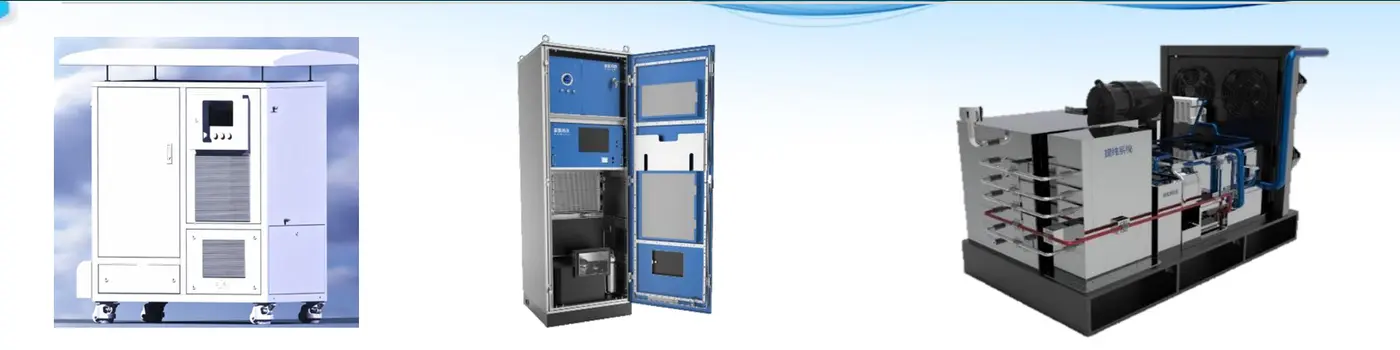
Modular 2.5-120 kW systems for low-noise power, using a specified methanol-water solution with integrated electrical and thermal subsystems.

Xuanwu series · FCS + ICS
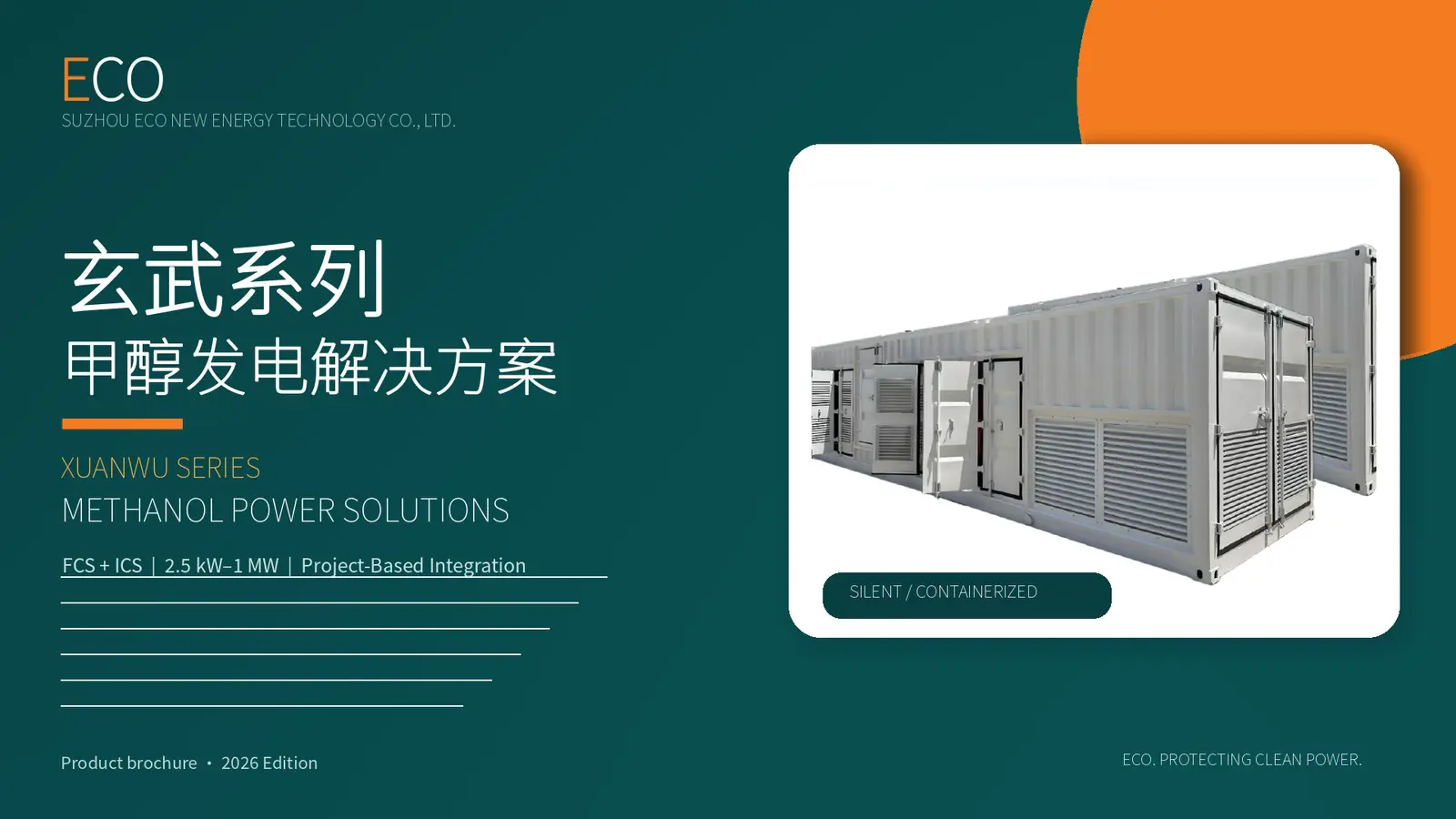
Two project-based architectures cover compact low-noise fuel-cell power and containerized internal-combustion generation. The Xuanwu series spans 2.5 kW to 1 MW for backup, prime, mobile and distributed-energy applications.
Dual architecture
FCS and ICS are complementary platforms. The correct route depends on continuous output, transient load, fuel logistics, acoustic limits, emissions targets, mobility and the applicable certification plan.
Modular 2.5-120 kW systems for low-noise power, using a specified methanol-water solution with integrated electrical and thermal subsystems.
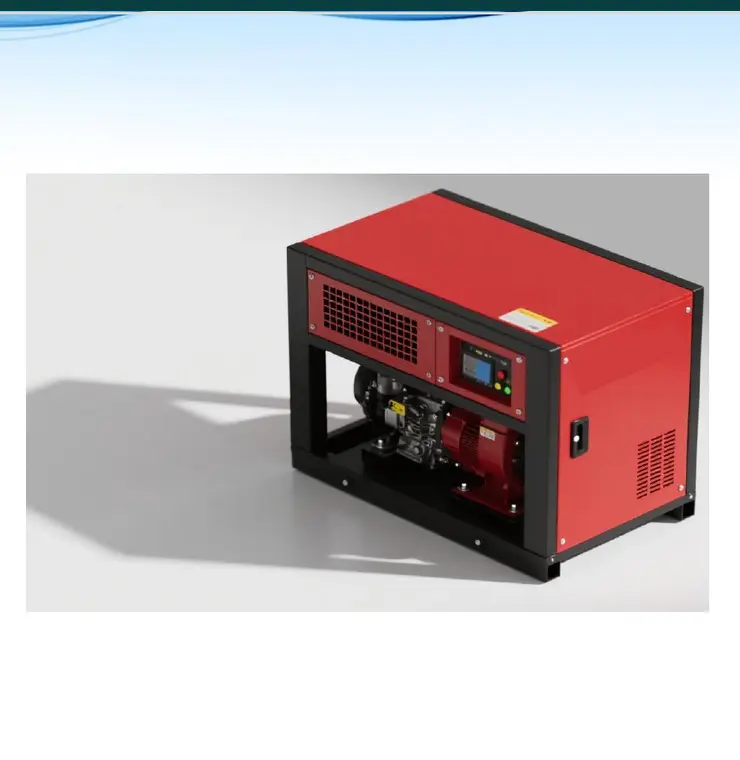
Dedicated M100 methanol engine-generator platforms from 5 kW to 1 MW, available as open, silent or containerized project configurations.
Project-specific power output, ATS or microgrid interface, fuel handling, remote monitoring and safety interlocks.
ECO cabinet, skid and container integration around the selected engine or stack, ventilation and service-access requirements.
Fuel-cell systems
Reference FCS products prioritize quiet operation and modularity. Final stack, fuel concentration, output interface, battery buffer and runtime are selected for the project.
| Reference family | Rated output | Reference fuel / output | Published reference data | Typical direction |
|---|---|---|---|---|
| ECO-FCS-2.5 | 2.5 kW | 59-61 wt.% methanol solution; 48 VDC or 220 VAC family direction | <65 dB at 1 m; 0.6 kg methanol/kWh; 40% system generation efficiency target | Compact distributed or backup power |
| ECO-FCS-10 | 10 kW | Project-selected DC or AC output | 20,000 h stated reference life; -10 to 55°C reference environment | Telecom, commercial and remote loads |
| ECO-FCS-50 / 100 | 50 / 100 kW | Modular cabinet or skid configuration | Fuel and performance values subject to the final selected stack | Distributed energy and microgrids |
| ECO-FCS-120 reference | 120 kW @ 380 V AC | 62-63 wt.% methanol-water solution; three-phase output | 150 kW-class low-temperature PEMFC; 96 kWh battery; 0.66 kg methanol/kWh reference | Grid or off-grid project reference |
The 120 kW reference lists no SOx from the fuel-cell system, while NOx and PM remain subject to validation. All consumption, life, efficiency, acoustic and emissions figures require confirmation under the final operating and test conditions.
Internal-combustion systems
The ICS line scales from compact 3000 rpm sets to silent industrial and containerized systems. Published values are reference configurations, not a substitute for the signed technical agreement.
| Reference models | Output class | Electrical direction | Reference fuel consumption | Acoustic / configuration direction |
|---|---|---|---|---|
| XW-ICS-5 / 8 / 12 | 5, 8 and 12 kW | 230 or 400 V; 3000 rpm | 590 g/kWh at full load | 75 dB(A) at 7 m reference |
| XW-ICS-18 / 30 / 30-Q | 18 and 30 kW | 400 V; 3000 rpm | 570 g/kWh at 18 kW; 500 g/kWh at 30 kW | Open and 60 dB(A) at 7 m silent option |
| XW-ICS-100 / 100-Q | 100 kW | 400 V; 1500 rpm | 500 g/kWh | Open and 65 dB(A) at 7 m silent option |
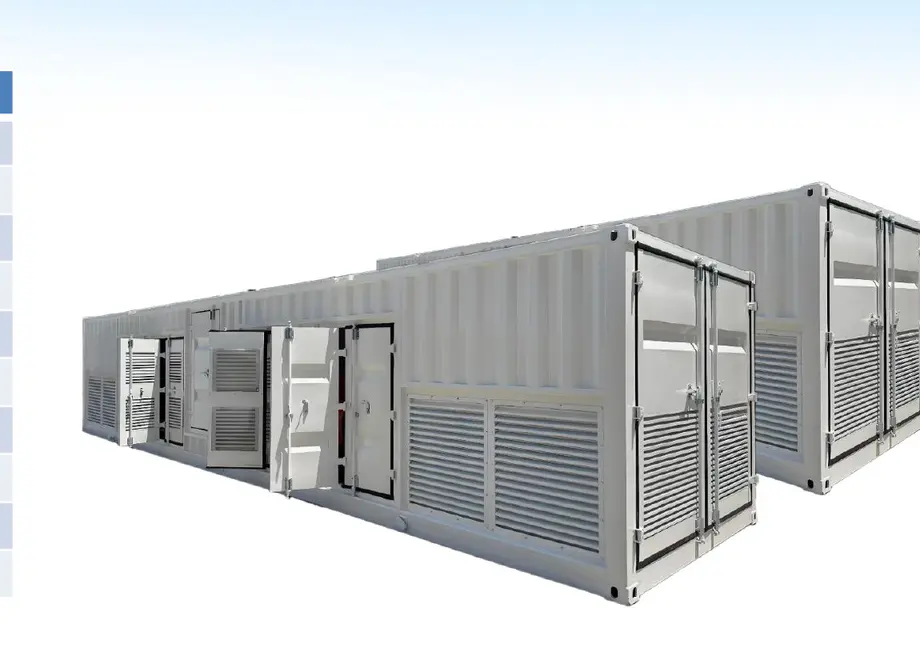
| XW-ICS-320-Q | 320 kW continuous / 400 kW standby reference | 600 V; 1500 rpm | 420 g/kWh | Silent container, 70 dB(A) reference |
| XW-ICS-500-Q | 500 kW | 400 V; 1500 rpm | 440 g/kWh | Silent container, 75 dB(A) reference |
| XW-ICS-1000-C | 1 MW engineering reference | 690 V; 1000 rpm | 380 g/kWh methanol + 20 g/kWh diesel pilot reference | Concept configuration; final design requires engineering approval |
Fuel consumption and noise depend on the final engine, calibration, acoustic treatment, ambient conditions, load factor and test method. Voltage options shown are brochure references and can require project-specific electrical design.
Typical applications
Application images in the source brochure illustrate use cases and are not presented as delivered ECO project references.
Containerized generation where fuel logistics, serviceability and site conditions drive the design.
10-300 kW class configurations for facilities requiring project-specific ATS and acoustic design.
100-500 kW class systems with controls, heat rejection and site distribution engineering.
500 kW class containerized direction subject to hazardous-area and customer specifications.
Integrate methanol conversion, storage, controls and local electrical infrastructure.
Coordinate dispatchable methanol power with batteries and renewable generation.
Project definition
A useful first enquiry includes load data, fuel availability, ambient conditions, target runtime, mobility and the destination-market standards.
FCS uses a methanol-water fuel-cell architecture for modular, low-noise power. ICS uses a dedicated methanol internal-combustion engine and scales to larger open, silent or containerized configurations.
The portfolio covers approximately 2.5-120 kW for fuel-cell systems and 5 kW-1 MW for internal-combustion generator systems.
Reference FCS products use a specified methanol-water solution, while ICS products are listed for M100 methanol. Final fuel composition, storage, supply and safety requirements must be confirmed per project.
No. Brochure figures are reference or indicative values. Results depend on the selected engine or stack, calibration, fuel quality, ambient conditions, load factor and test cycle, and require project-specific validation.
Request a concept selection
We will compare FCS and ICS directions and define the generator, fuel system, electrical interface, enclosure and validation scope.