Battery-only supply
The engine stops while the grid-forming PCS supplies light loads and quiet-hour demand.

Diesel generator hybrid energy storage
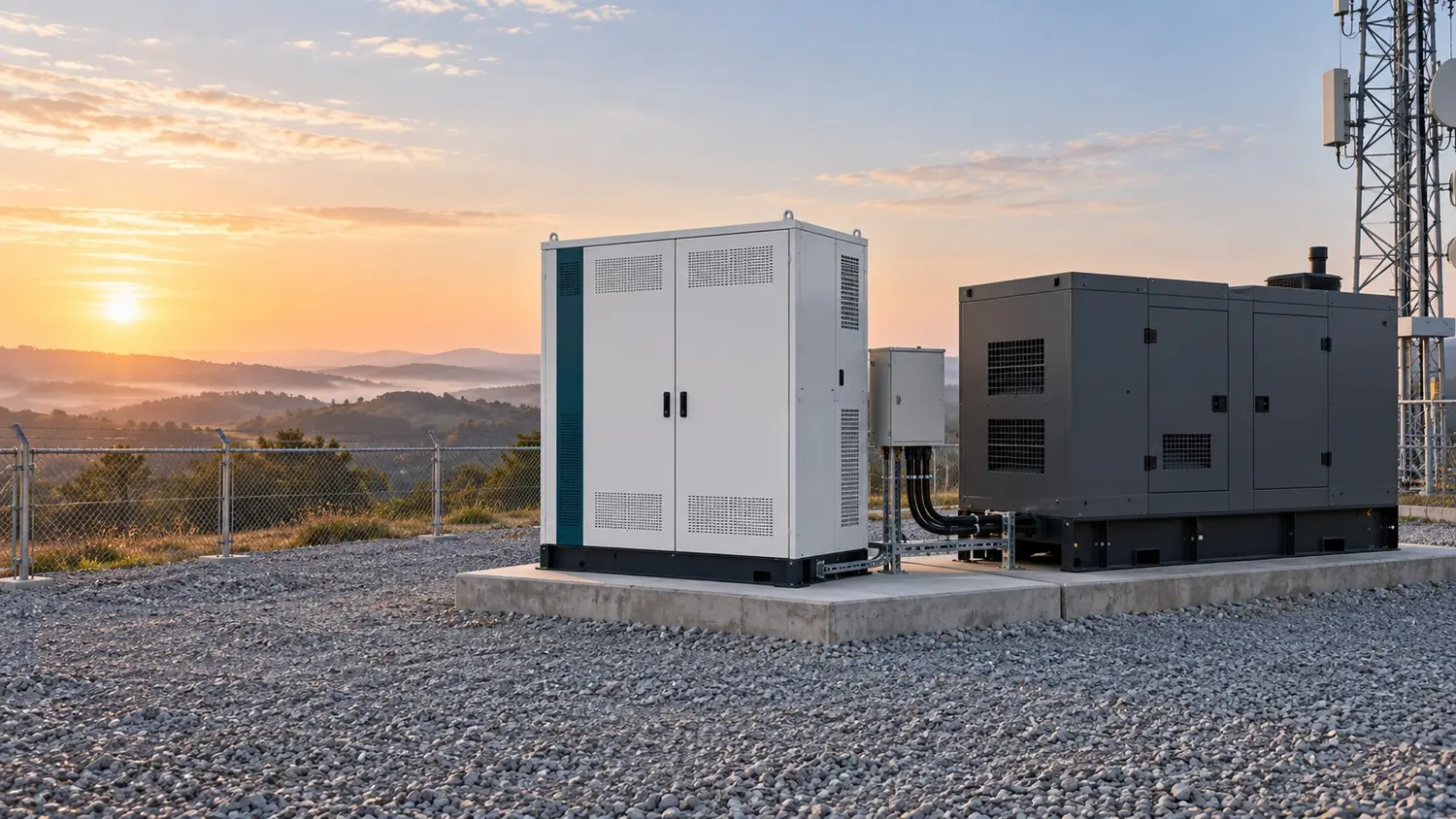
Quiet power without continuous engine runtime. ECO HES coordinates an existing diesel generator, LFP battery, grid-forming PCS and EMS on one AC bus to cover light loads, support peaks and concentrate engine operation into controlled charging periods.
Why hybridize a generator?
Traditional generators can spend long periods supplying only a fraction of their rated output. The HES forms the AC bus for lighter demand and requests the generator only when power or battery state of charge requires it.
The objective is operational, not simply electrical: reduce unnecessary engine hours, create quiet operating windows and let the PCS support short power peaks without oversizing the generator for every transient.
Reference pilot targets in the product definition are 40-70% fewer engine hours, 20-40% fuel reduction and a ≤60 dBA battery-mode target at 1 metre. These are evaluation targets and require site validation.
The engine stops while the grid-forming PCS supplies light loads and quiet-hour demand.
The generator starts, synchronizes and charges the battery while serving the site load.
The PCS supports motor starts and variable load spikes that would otherwise stress the genset.
Battery black start and a maintenance bypass support recovery and service planning.
Automatic operating sequence
A typical sequence starts with quiet battery supply, brings the generator online when required, charges under controlled conditions and stops the engine after cooldown.
PCS forms the AC bus while the generator remains off.
A power, SOC or schedule threshold triggers the genset.
Controls coordinate connection and protection.
The engine serves demand and replenishes stored energy.
The engine shuts down after the target window is met.
Standard IEC range
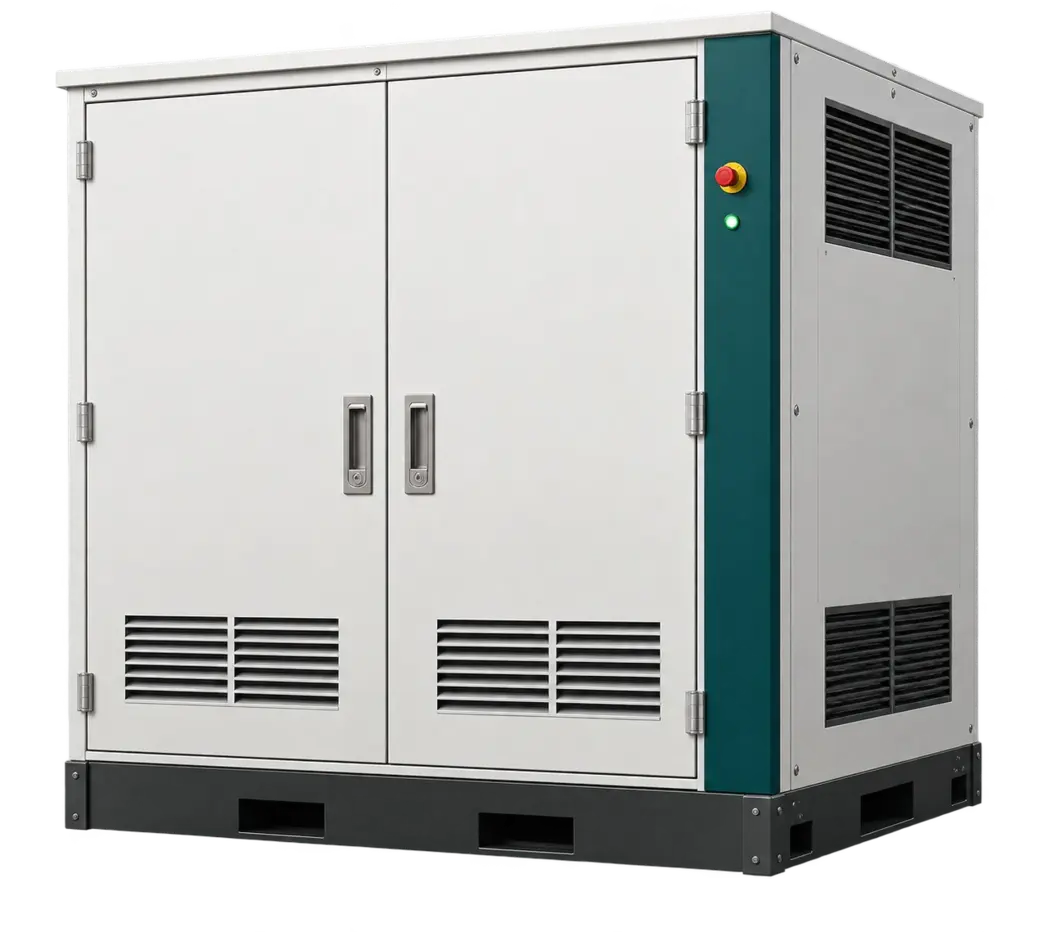
The HES-50/100 is the balanced launch model for 60-150 kVA fleet retrofits. Final sizing follows measured load, motor starting demand and the required quiet-energy window.
| Model | PCS power | Battery | Recommended genset | Cabinet concept |
|---|---|---|---|---|
| HES-30/60 | 30 kW | ≈61 kWh LFP | 30-100 kVA | Single cabinet, approx. 1600 × 1100 × 2200 mm |
| HES-50/100 | 50 kW | 102.4 kWh LFP | 60-150 kVA | Dual compartment, approx. 2200 × 1200 × 2300 mm |
| HES-100/200 | 100 kW | ≈205 kWh LFP | 150-300 kVA | Dual cabinet or 10 ft skid |
Reference configuration: 380/400/415 VAC, 3P4W, 50/60 Hz. Final ratings, component brands, dimensions, protection settings and compliance scope are frozen after detailed engineering and testing.
Integration scope
Standard parallel mode supports synchronized operation. A compatibility transfer mode can reduce integration risk where legacy controls do not support full paralleling, with transfer performance dependent on the selected switching arrangement.
Cover nights and low-load periods quietly while retaining generator capacity for high demand.
Reduce engine runtime where service visits, fuel logistics and noise are operational constraints.
Support cycling loads, quiet hours and short peak demand with project-specific sizing.
Coordinate stored energy and generator dispatch as part of a broader site power architecture.
Sizing questions
A 30-day pilot can convert fuel-saving assumptions into measured results before a wider fleet rollout.
Yes. Final integration depends on the generator controller, synchronization and protection arrangement, voltage, frequency and measured load profile.
The brochure uses a 20-40% fuel-reduction target for pilot evaluation. Actual savings must be verified against the site's load curve, fuel consumption, control settings and duty cycle.
The standard direction is 380/400/415 VAC, three-phase four-wire, at 50 or 60 Hz. Other requirements are reviewed as project configurations.
Send the generator brand, model, controller and rating; 7-14 days of load data or a representative schedule; fuel cost and consumption; site voltage, frequency and earthing; and photos showing cable distance and available installation space.
Request a hybrid sizing review
We will match the PCS, energy capacity, control interface and cabinet arrangement to the generator fleet and operating objective.